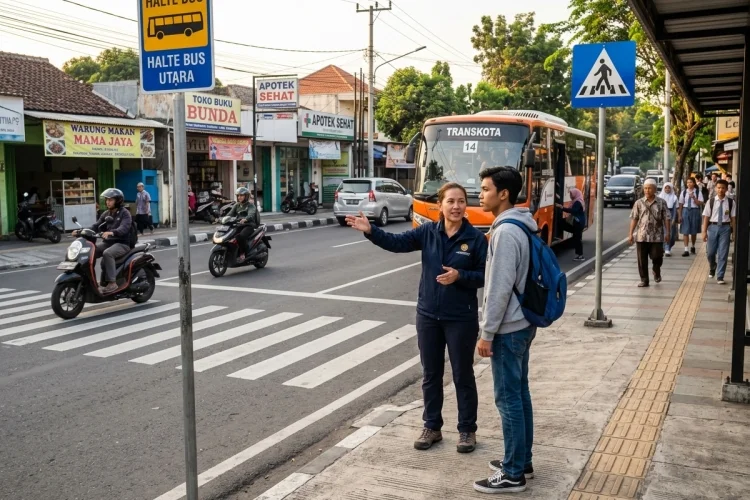
Traveling to a nearby shop, school, library, workplace, or bus stop may seem routine to an experienced adult. For a learner building independence, however, even a short journey can involve dozens of decisions.
Which route should I take? Where is the safest place to cross? What if the bus does not arrive? Who can I ask for help? What should I do if I accidentally get off at the wrong stop?
That is why teaching safe travel skills in the local community should be a gradual process rather than simply telling someone to “be careful.”
Travel safety matters globally. The World Health Organization reports that road traffic crashes cause approximately 1.16 million deaths each year, with more than half of road deaths occurring among vulnerable road users such as pedestrians, cyclists, and motorcyclists.
Road traffic injuries are also the leading cause of death for people aged 5-29. Good travel training combines real-world practice, clear safety rules, repetition, problem-solving, and gradual independence.
1. Start With a Familiar Destination
Do not begin travel training with a complicated trip across town.
Choose somewhere the learner already knows, such as a nearby shop, school, park, community center, or relative’s home.
Walk the route together several times.
Point out useful landmarks:
“The pharmacy comes before our turning.”
“The bus stop is opposite the supermarket.”
“We cross after we reach the traffic lights.”
Landmarks can be easier to remember than a long series of street names.
Travel instruction programs commonly begin by assessing the individual’s abilities and then teaching specific, useful routes through repeated hands-on practice.
NADTC describes travel instruction as a way to help people gain confidence and use community transportation with increasing independence.
Keep the first goal simple: one destination, one route, and one reliable routine.
2. Teach Pedestrian Safety Explicitly
Never assume someone automatically understands road safety simply because they have walked beside adults for years.
Teach each skill directly.
Learners should understand where pedestrians are expected to walk, how to recognize safer crossing locations, and why they must continue checking traffic even when they appear to have permission to cross.
NHTSA recommends using sidewalks where available, crossing at intersections or marked crossings, obeying traffic signs and signals, watching for turning or reversing vehicles, and remaining alert while crossing.
Teach these behaviors during real journeys.
Instead of saying only, “Watch the road,” explain what to watch:
“That car is slowing down, but we still wait until we know it has stopped.”
“Look at the driveway. A vehicle could reverse from there.”
“Check every direction before stepping into the road.”
Safety rules should become observable actions rather than vague warnings.
3. Break Road Crossing Into Clear Steps
Crossing a road contains several separate decisions.
Teach a consistent sequence based on local road rules, signals, and infrastructure.
For example, the learner may need to:
Stop at the edge → Find the designated crossing → Check signals → Observe traffic from all relevant directions → Wait until it is safe → Cross while continuing to watch traffic.
The exact procedure needs to match local traffic rules, including which direction traffic approaches from.
NHTSA emphasizes that pedestrians should use crossings or intersections when available and should stay alert to vehicles, signals, cyclists, and turning traffic throughout the crossing.
Do not teach learners to rely completely on drivers noticing them.
A green pedestrian signal, marked crossing, or stopped vehicle reduces risk but does not mean attention is no longer necessary.
Practice repeatedly at the same safe crossing before introducing more complicated roads.
4. Teach Learners to Evaluate the Route
The shortest route is not always the safest route.
A slightly longer journey may provide sidewalks, pedestrian crossings, better lighting, or quieter streets.
Walk the route with the learner and discuss potential hazards.
Ask:
“Where would you cross here?”
“Can you see traffic clearly?”
“What could make this crossing difficult?”
“Is there a safer option?”
NHTSA’s walkability guidance highlights problems such as missing sidewalks, blocked paths, roads that are too wide to cross comfortably, poor visibility, fast traffic, inadequate signals, and vehicles reversing from driveways.
This is an important step because safe travel is not simply memorizing directions.
Learners also need to notice when an environment is different from what they expected.
If construction blocks the normal sidewalk, for example, the safest decision may be to stop and seek help rather than improvise an unfamiliar route.
5. Introduce Public Transport One Skill at a Time
Public transportation adds another layer of complexity.
A learner may need to find the correct stop, identify the route, understand the fare, board safely, know where to sit or stand, recognize the destination, and get off at the correct place.
Break this into separate lessons.
During the first practice journey, focus mainly on finding and recognizing the bus stop.
Later, practice identifying the correct bus.
Then work on payment.
After that, teach how to recognize the destination.
Travel-training programs for people with disabilities often include learning how to understand transit schedules, identify routes, pay fares, and travel safely using fixed-route services.
Do not rush toward independent travel simply because the learner successfully completes one supervised journey.
Competence needs to be consistent across repeated trips.
6. Use Visual Routes and Travel Checklists
Some learners may benefit from having important travel information available visually.
A simple route card could show:
Home → Corner Shop → Traffic Lights → Bus Stop → Library
Another checklist might include:
Phone → Travel Card → Money → Address → Emergency Contact
Photographs of landmarks can also be helpful.
A learner could see a picture of the supermarket and know, “My stop comes after this building.”
Digital maps and navigation apps can eventually be useful too, but learners should still understand basic route safety. A phone battery can run out, an app can suggest an unsuitable pedestrian route, or mobile service can disappear.
Use technology as a support rather than the only source of travel judgment.
Travel instruction is most effective when the tools are matched to the individual’s abilities, needs, and specific journey.
7. Teach What to Do When Something Goes Wrong
A safe traveler needs more than the ability to follow the perfect version of a route.
Real journeys change.
A bus might be cancelled.
A normal crossing could be closed.
The learner might miss their stop or take a wrong turn.
Teach a simple rule:
Stop, stay somewhere safe, and use the agreed help plan.
Practice scenarios before they happen.
“What would you do if you missed your bus stop?”
“What if your phone battery died?”
“What if you could not recognize where you were?”
“What if someone offered you a ride?”
The exact emergency plan should be individualized. It might involve calling a trusted person, speaking to identified transport staff, going to a predetermined safe location, or using another agreed method of assistance.
Avoid telling learners simply to “ask any adult.” Instead, teach how to identify appropriate sources of help based on the local environment.
8. Teach Safe Ways to Ask for Help
Knowing how to request assistance can prevent a small problem from becoming a serious one.
Practice simple sentences:
“Excuse me, does this bus go to the library?”
“I think I missed my stop. Can you help me?”
“Where is the information desk?”
“Can I use your phone to call my family?”
Role-play these interactions before practicing them in the community.
Transport workers, station staff, information-desk employees, security personnel, police, or staff inside established businesses may be appropriate sources of assistance depending on the situation and country.
Learners should also know what personal information is safe to share.
They may need to communicate their destination or an emergency contact, but should understand that passwords, PINs, and unnecessary private information should not be given to strangers.
Good travel training builds both independence and judgment.
9. Practice Community Safety Without Creating Fear
Safety lessons can easily become a long collection of frightening warnings.
That is usually not helpful.
Instead of teaching, “The community is dangerous,” focus on practical responses.
If someone makes the learner uncomfortable:
Move toward a safer public place.
Do not follow the person.
Contact the agreed support person if necessary.
If belongings are lost:
Stop.
Check the immediate area safely.
Use the established help plan.
The goal is awareness rather than fear.
Most community travel involves ordinary situations, and learners need enough confidence to participate in daily life rather than becoming afraid of leaving familiar environments.
WHO’s Safe System approach also recognizes that road safety is not solely the responsibility of individual pedestrians. Safer roads, appropriate speeds, safe vehicles, and infrastructure all play important roles in reducing injury.
That matters: good travel training helps learners manage risk, but it cannot make an unsafe environment completely safe.
10. Gradually Reduce Adult Support
Independence should be earned through demonstrated skill, not assumed because someone has reached a certain age.
Begin by traveling beside the learner and explaining decisions.
Later, let the learner lead while you follow.
Ask them to decide where to turn, identify the crossing, locate the bus stop, and manage payment.
Gradually reduce prompts.
A progression could look like:
Adult leads → Learner leads with prompts → Learner leads with adult observing → Learner completes part of route independently → Independent journey when appropriate.
NADTC describes travel instruction as individualized training intended to build confidence and the ability to use transportation independently.
However, independent travel will not be appropriate for every learner, every route, or every environment.
The goal should always be the safest realistic level of independence-not independence at any cost.
Teaching safe travel skills in the local community requires much more than memorizing a route.
Learners need pedestrian safety skills, safe road-crossing habits, route awareness, transportation knowledge, problem-solving strategies, and a clear plan for asking for help when something unexpected happens.
Start with one familiar destination and practice it repeatedly. Break the journey into manageable stages, use landmarks or visual supports when helpful, and gradually allow the learner to make more of the travel decisions.
Most importantly, base independence on demonstrated ability and the actual safety of the environment.
Choose one useful local journey this week and walk through it together. Ask the learner to identify the route, hazards, crossing points, landmarks, and help options.
Each successful journey can become another step toward safer community participation and greater independence.